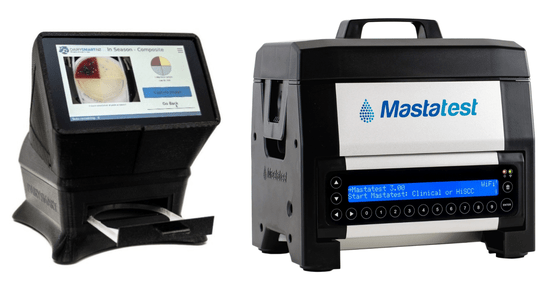
We now have two machines in-clinic that we can use for milk sample testing.
The Mastatest machine, which has been around a few years, can run up to four cartridges for clinical mastitis and eight samples of subclinical mastitis in a 22-hour turnaround period. It can also identify bacteria as well as antibiotic sensitivity.
The Jupiter machine, which has been available for around a year, uses more traditional agar plates and an incubator, however, uses AI to detect what species are present.
Here are the pros and cons with both:
Mastatest Pros:
22-hour turn around;
Will give antibiotic sensitivities as well as bacteria growth;
Will pick up all the common causes of mastitis on NZ farms;
Has an ability to do high cell count subclinical cows.
Mastatest Cons:
Cannot do blood-tinged milk, very clotted milk, or milk with dirt in the sample;
22-hour cut-off does not cover slow growing bacteria;
Can only run four clinical tests per machine.
Jupiter Pros:
Can have a large number of tests running simultaneously;
If there is no growth after 24 hours, the culture can still continue for 48 hours for slower growing colonies;
Can identify a wider range of bacteria, and any the AI does not recognise gets sent to human experts;
Can culture out if there is blood-tinge in the sample.
Jupiter Cons:
Does not do any antibiotic sensitivities;
Does require manual picture catchment at 24 and 48 hours following culture.