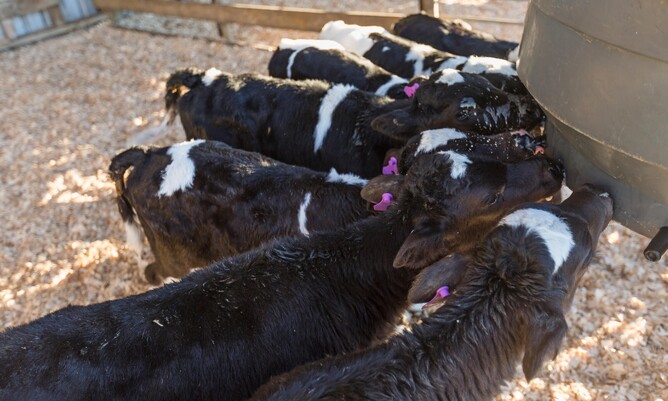
We had a few of our farms do passive transfer (PT) testing on their calves this season. PT testing checks for absorption of immunoglobulin from colostrum, and therefore the passage of immunity against disease from cows to calves.
Here's a quick comparison of the results:
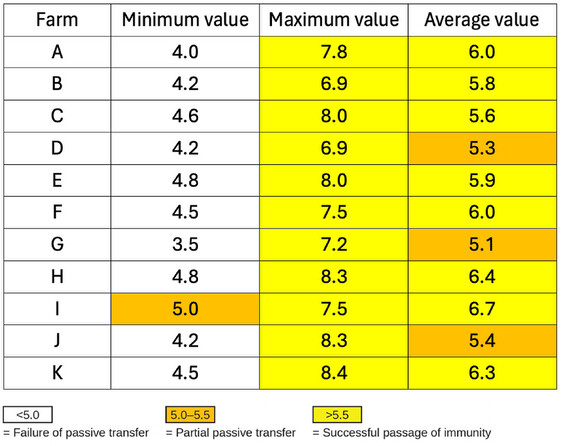
Results less than 5.0 are classed as failure of passive transfer, results between 5.0-5.5 are a partial passive transfer, and anything more than 5.5 is a successful passage of immunity.
The results this year show nearly all farms had calves that did not receive full PT, but they also all had many calves that did receive full PT. Averages range from partial to good coverage, indicating that the majority of calves on these farms did get adequate antibodies.
It's important in a calf’s development that we give it the best start possible, and a functioning immune system is vital for that. Ideally every calf through the shed would receive a successful passage of immunity.
Now is a great time for your calf rearers to recap on how this season went and review calf rearing practices on your farm. You're welcome to reach out to your KeyVet for a yarn too. Let's have a think about how we could get even better results next year.
The best way to improve PT is improving the 5 Q’s of colostrum:
Quality: >22 on a refractometer.
Quickly: 6-12 hours after birth are when the best absorption of antibodies happens.
Quantity: Aim for 10% of the calf’s body weight in those first few hours.
SQueaky clean: Good hygiene lowers the number of pathogens the newborn calf must face.
Quantify: Routinely evaluating farm data is essential to keep colostrum management in-check.
If you would like to see how your colostrum delivery is working and compare your farm’s PT values to other local farms, then please book us in for some testing next spring. We often do this at the same time as the first lot of disbudding to reduce the number of stressful events for the calves.