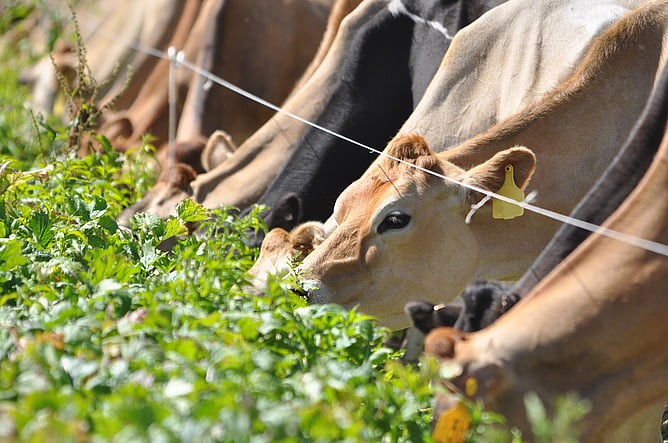
Dairy cows are getting dried off and this means diet changes!
Over winter most of you will feed your cows a crop of some sort (kale, fodder beet, swedes, raphno, etc.) in combination with silage and/or grass.
To change their diet from a pasture-based diet to a crop-based diet, cows need to transition. This means that the rumen bacteria need to adjust to be able to fully digest, absorb and utilise the new diet. Fully utilising the diet is essential if cows need to increase or maintain their body condition.
Transitioning to a new diet takes time. For a winter diet transition, change feed gradually over a 2-3 week period and introduce any crops slowly into the diet (preferably putting cows on crops after eating their daily allocation of silage/baleage).
It's important to keep in mind that if you dry cows off in batches, cows that are in the first mob dried off will likely be further in their transition to the winter diet than those that are dried off later. These last cows will need the same careful diet transition.
If cows are not transitioned well, they can show signs of milk fever, have smelly diarrhoea, look hollow in the guts, and ruminate less. These cows will lose body condition and can even lose their pregnancy. In severe cases, they can die.
Another thing to think about is trace elements. If you normally supplement trace minerals through the dosatron, does the herd still have access to those minerals over winter?
Crops can deplete copper from animals and the calcium:phosphorus ratio in some crops can also cause issues. Selenium levels need to be adequate in winter as well. Now is the time to take blood and liver samples to check the mineral levels of your cows going into winter.
Don't forget, there are also winter grazing regulations to consider. We have to ensure good animal health and welfare, minimise soil and nutrient loss to the environment, and have plans in place for bad weather events.
Then, at the end of winter, there's another transition needed: from a dry diet to a lactating diet. Often the time cows spend in the springer mob is used to do this transition, changing cows back to eating more pasture. This transition time is critical to prevent milk fever and down cows over calving.
With all of these considerations taken into account, your herd will have a good transition period, maintain (or put on) body condition, grow their calves well, and rest ahead of the next milking season!
If you have any questions specific to your farm about transitioning on to and off of a winter diet, please reach out to our team!